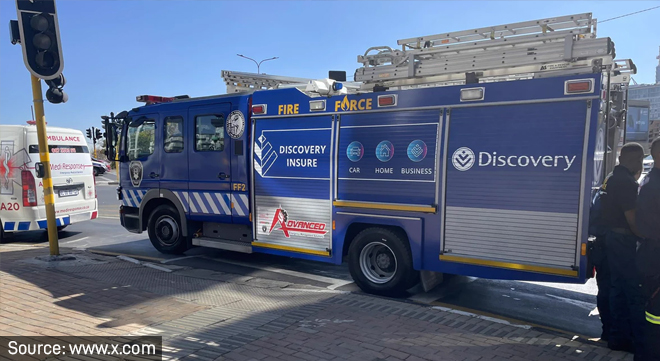
The race to reach a fire before it becomes a total loss
When a house catches fire, the difference between a room that can be repaired and a home that must be rebuilt may be measured in minutes.
That reality is changing the way some insurers approach fire risk. Alongside paying claims after a fire, they are investing more heavily in technology, emergency response, and risk management aimed at limiting damage before a small incident becomes a catastrophic loss.
Fire remains one of the world’s leading insurance risks. The Allianz Risk Barometer 2026 ranks fire and explosion among the world’s 10 biggest business risks, describing it as one of the most destructive and disruptive events companies can face. The report says that increasingly complex risks are prompting businesses to complement traditional risk transfer with more integrated resilience strategies.
Santam’s 2024/25 Insurance Barometer suggests the same shift in insurers’ thinking. It says insurers are operating in a “new normal” of more frequent and severe catastrophes, citing the January 2025 California wildfires, which resulted in an estimated US$38 billion to US$42 billion in insured losses, as an example of how inadequate fire resilience can magnify losses. It says insurers are increasingly investing in smarter technology, targeted risk mitigation, and more responsive claims handling.
For Discovery Insure, the changing risk landscape prompted a closer examination of its own claims experience. The insurer began asking whether reducing the time between a fire starting and emergency responders arriving could significantly limit the extent of a claim.
That question led the insurer to build a national fire-response capability using specialist private firefighting companies, one of which is Fire Ops SA.